The New York World under date of January 15, 1923, published a statement of Drs. Clark Wissler and Franz Boaz (the latter a professor of anthropology at Columbia University), confirming the statement of the French that Moroccan and Algerian troops used in the invasion of Germany were not to be classified as Negroes, because they were not of that race. How the French and these gentlemen arrive at such a conclusion is marvelous to understand, but I feel it is the old-time method of depriving the Negro of anything that would tend to make him recognized in any useful occupation or activity.
(…)
The Moroccans and Algerians have a splendid opportunity of proving the real worth of the Negro in Europe, and who to tell that one day Africa will colonize Europe, even as Europe has been endeavoring to colonize the world for hundreds of years.
The Disparate Impact of Rhetoric
It’s peaks and valleys across the intellectual landscape of our diverse population. Some demographics are more sophisticated than others. This is the media’s implicit justification for suppression of various outrages, from black crime in the States to Muslim barbarity in Europe. To their mind the enlightened liberal isn’t the problem; it’s the ignorant prole that can’t be trusted with objective reality. The ignorant must be kept ignorant, lest their ignorance bring us harm.
Meanwhile the American liberal is habituated to a learned or feigned indifference in the very same things. To be concerned about trans men in bathrooms or immigrant crime is to reveal oneself as to be frightened by bogeys, out of ignorance, or of such low status as to be threatened by trivialities (and at this point we have to concede the official global-elite position on such as Muslim rape gangs is that they are trivialities).
The liberal defines himself in opposition to what he sees as conservative hysteria: the more it annoys the proles the more he is expected to show indifference. But indifference is just another word for ignorance. He’s in a conundrum. Our whole world is in a conundrum, of his making.
Indifference can become a heavy psychological load at the individual level. The more intelligent the individual and the greater outrage he’s expected to ignore, the greater the tension. Modern liberal man, white-knuckles gripping the rails of the good ship Utopia, doesn’t want to know about Rotherham, or Detroit, or what’s really going on in the head of a transvestite. The media doesn’t only suppress information to keep the regular folk in the dark, it suppresses information to keep liberal cognitive dissonance from boiling over.
the more indifferent–especially indifference inversely proportionate to that which appalls or angers the prole–the better. This is how he signals his status. But the posture itself ensures more and worse things to endure beneath the serene veil of indifference; it’s better if these things aren’t known. Ignorance is essential to Tolerance.
Suppression of news has the secondary effect of saving the right-thinking from too much cognitive dissonance. That becomes a challenge, obviously, when you’re dealing with black urban America or male Muslim migrants. The same level of indulgence will have wildly disparate impact on any two distinct groups. So if it’s blacks you’re indulging, be prepared to indulge some crazy shit. Better not to know in the first place–this thought haunts the minds of liberals like a specter.
White liberals hold their poor cousins can’t be trusted with all the facts because they’re irrational. But black America can.
Better still–judging the liberal order’s indulgence of black American passions–black America can be trusted with the frauds. Where the white working class is denied even a point of view, black America’s is indulged on principle; no one dare point out what so many must think: there is no worse population to encourage than this one (at least, until our Muslims become numerous enough to challenge them).
But white liberal America trusts black America to show restraint in the face of wild hyperbole and questionable logic, all woven into the never-ending fantasia of White Racism. The mainstream and corporate embrace of Black Lives Matter has given convention’s stamp of legitimacy to it all. Yet on every metric by which the liberal sees the white wearer of the wife-beater as deficient–education, propensity for emotion, violence, bigotry, intelligence, tolerance, altruism; everything the elitist cites as root causes of bigotry–black America lags negatively. Black agency doesn’t exist in his mind–considering it is racism itself.
When the liberal is freed from the racial burden, his innate snobbery comes to the fore. They take as a given that some groups are smarter and more rational than others–in, say, comparing unfavorably the education levels of working class whites with other whites. This allows us to observe elite attitudes while controlling for race, when race is left out (something becoming rarer and rarer) of the story. And here it’s revealed how their enthusiasm for black concerns–so far unbounded–is not principle opposed to racial inequality but partisanship demanding it, for non-whites. They aren’t applying a standard but picking sides.
They sometimes openly cite the disparate impact of objective truth on impressionable populations as justification for editing out otherwise relevant fact–the eternal white racist bogey, out there in the great, barely less racist working class white mass, must not be encouraged in any way--because he can’t be trusted to process information free of rancor, bias and ignorance. But who does this sound like, really?
As a result of the extreme deference paid to black American opinion and ever-lower expectations of behavior, all a result of chasing standards downward to correct the “disparate impact” of “racism”, there is no upper limit on hyperbole. Black suffering, its style and playing out, the inevitability of its justice, its soundtrack and language, all of it is for the average earnest white boomer their generation’s equivalent of the Great Good War. They will not surrender their expectations under mere failure and societal collapse.
They are worse than blind. Not only do they project onto black America a dignity and decency that isn’t there, they created it a powerful alternate reality of film and television where it exists, along with genius, competence, and a ubiquitous white shame and inadequacy in its face. A world of lies–even well-intended ones–is a world of horrors.
The elites hold fast to the principle of elite merit, they have completely abandoned the other half of that equation–their responsibility for their co-ethnics, which they’ve replaced with the Other, who they see as being less trouble but above all, less embarrassing. It’s just easier this way.
The new technocratic, meritocratic and ironic elite abandons their poor cousins for the most appalling Third World brute, with a smirk.
Helter Skelter
The legal concept of disparate impact presumes a uniformity of intelligence and industry across racial categories against which the “disparate” or “adverse” impact of racism stands out, as if in relief. Of course the concept operates from the universal misconception “talent must be distributed equally”, and merely gives a name and legal authority to conventional wisdom that holds racial inequality from wealth to incarceration to be a reliable and shameful measure of racial bias.
A useful concept of disparate impact could have real value if it was only allowed to exist: any law, policy or social phenomena will have predictably disparate impact across a diverse population. An equally applied law will have unequal results. Social change has wildly disparate and adverse impact; the sexual revolution affects the working class a little differently than it affects the elite that writes its propaganda, for one instance. Disparate impact can have huge, even evolutionary implications, it would seem. Understanding it is another necessity we deny ourselves for political correctness.
Rhetoric has a disparate impact. Smarter groups of people are better equipped than others to critically assess the dominant narrative of the moment. They’re also more forgiving of hyperbole and less in thrall to emotion, all else being equal, than the less intelligent. And no group is less equipped in this regard than black America. Feeding them this relentless tale of white rapine and plunder is historically irresponsible.
Black Lives Matter is partly a reaction to the disparate impact of white norms of behavior. BLM seeks relief for blacks from these oppressive norms. It gropes toward something like a general legal double standard for blacks, enforced by a federal bureaucracy, using the Orwellian language of equality and justice. Attempts to shame BLM with black-on-black murder statistics are pointless because the cliche is true: BLM isn’t really about black lives. But it is about something. It’s about black American autonomy. It’s an inchoate revolt against white norms.
Same as it Ever was
With several assassinations now of police and at least one attempted mass murder of white civilians motivated by the Black Lives Matter movement it bears asking if it constitutes genuine political terrorism or just a higher level of black hostility toward law enforcement and whites. The loose structure and inherent chaos of BLM work somewhat to immunize it from the actions of its more fervent adherents. But the current wave of politically-motivated violence, whatever you call it, is already punching way above its weight in lethality relative to the Left’s last spasm of politically-motivated violence
Beyond the Weather Underground, the Black Panthers, and the kidnapping of Patty Hearst, the period has been conveniently forgotten by boomers now in power. It was a product of the Sixties but ran its course in the Seventies and didn’t spend itself until the mid-Eighties, with the more dedicated and disciplined groups like the Puerto Rican independence group FALN, planting bombs in New York and Chicago up until the time young Barack Obama, still dreaming for himself a more radical–and modest–future than destiny had laying in wait, walked their streets. Bryan Burrough’s 2015 history of the time, Days of Rage:
“People have completely forgotten that in 1972 we had over nineteen hundred domestic bombings in the United States” notes a retired FBI agent, Max Noel. People don’t want to listen to that. They can’t believe it. One bombing now and everyone gets excited. In 1972 it was every day. Buildings getting bombed, policemen getting killed, it was commonplace.”
There are crucial distinctions, however, between public attitudes toward bombings during the 1970s and those today. In the past twenty-five years terrorist bombs have claimed thousands of American lives, over three thousand on 9/11 alone. Bombings today often mean someone dies. The underground bombings of the 1970s were far more widespread and far less lethal. During an eighteen-month period in 1971 and 1972, the FBI reported more than 2,500 bombings on US soil, nearly 5 a day. Yet less than 1 percent of 1970s-era bombings led to a fatality; the single deadliest radical-underground attack of the decade killed four people.
The social justice terrorists of the Sixties employed extreme rhetoric and some even imagined the Stalinist purges they would later lead, but they underestimated their own capacity for violence and (probably more important for a calculating figure like Ayers) that of the murderous hordes they hoped to inspire. Not so true for the black radicals of the time. As now, radical politics were for blacks a racial solidarity movement, the antithesis of white radicalism, driven by race hatred as much their white counterparts–at least as they imagined–were driven by opposition to race hate. The Democratic Party remains a dysfunctional coupling of white ethno-masochism and non-white ethnic solidarity.
Left out of most accounts of the time are the Black Muslim Death Angels, less an organization than a tradition attached to the Nation of Islam. The Death Angels may have killed hundreds of whites (to test the cold-blooded brutality, rather than skill or courage, of recruits they were given more credit for murdering women and children) in California alone as part of a leadership initiation ritual. As only four Black Muslims (of eight suspects) were convicted for a fraction of the murders, they mostly got away with it.
But if there are no demands made and no publicity sought–no attempt to terrorize–is it terrorism or just guerrilla warfare? Does the whole of black recreational violence targeting whites, borne along by the relentless narrative of black oppression, constitute a campaign of political violence and terror?
There’s just one real book on the subject, about a local Death Angels campaign in San Francisco in the Seventies that became known as the Zebra Murders, Clark Howard’s Zebra. Nicholas Styx wrote about the case:
Richard Walley, who until his unfortunate death from cancer in 1974, ran the California Department of Justice’s Intelligence Analysis Unit (IAU), was convinced that during the 1970-early 1974 period alone, the NOI was responsible for 71 black-on-white racial murders in California. In Zebra, however, author Clark Howard estimated that the NOI was guilty of “just under 270” black-on-white murders in California during the same period.
There is another book on the case, a supposedly autobiographical account of the time by the disgraced first black police chief of San Francisco, Earl Sanders, co-authored with a screenwriter and optioned years ago by Dreamworks as a Jaime Foxx project. The book is an attempt by Sanders to portray his minor role in the investigation as major and place it–where else?–in the context of him fighting the Good Fight against racism.
The rhetoric of BLM is revolutionary, through and through, but, unlike the revolutionary groups of the Sixties, it has mainstream credibility and authority–one can lose his livelihood for publicly offending it, for example–this is a fundamental difference between it and any protest group, from milquetoast to militant, from the Sixties. There is no establishment opposition to them. On the contrary, there is much establishment support. In that light, police assassinations by BLM supporters can’t be seen as terrorism, at least not anti-state terror. There are no laws on the books to repeal and mainstream convention is in agreement with the terrorists it inspires on everything but remedies.
The current revolution’s problem is it is in direct competition with the power it supposedly opposes for its would-be leaders. Corporate and governmental America are so geared toward uplifting blacks the the already-lean talented tenth of black America sells itself on the market at a considerable premium. Despite the rhetoric, long gone are the days when a black American of any talent at all found himself stymied by convention. Non only that, if it’s radicalism he’s interested in, he can be well compensated for that too. Is it any wonder BLM appears to be a dozen homosexuals and women leading an amorphous mass of gullible idiots?
The political terror of the present isn’t revolutionary struggle, it’s revolutionary rule.
Akron, Ohio
I overshot the airport by a good ten miles and found myself at a traffic light somewhere around downtown Akron.
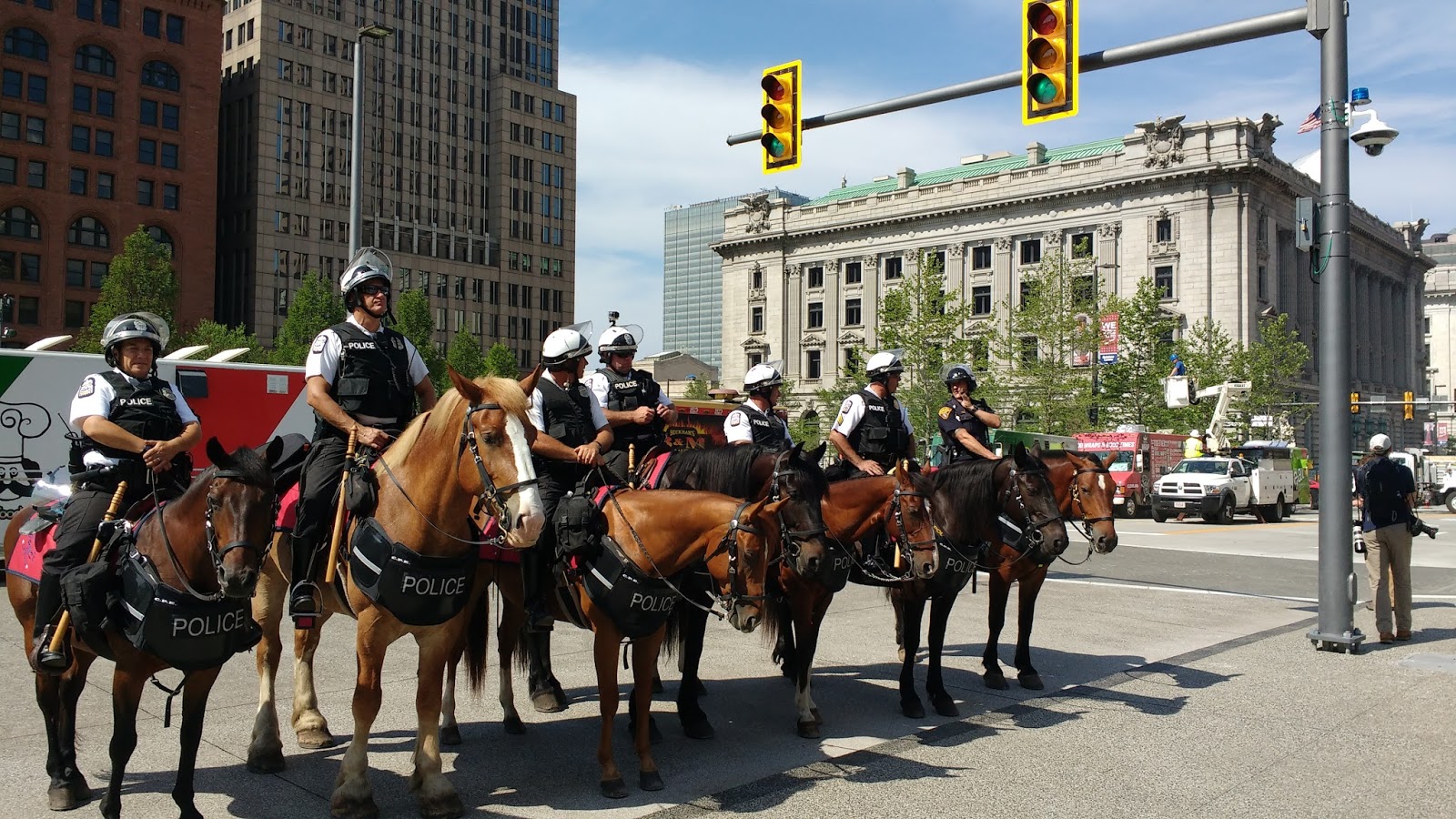
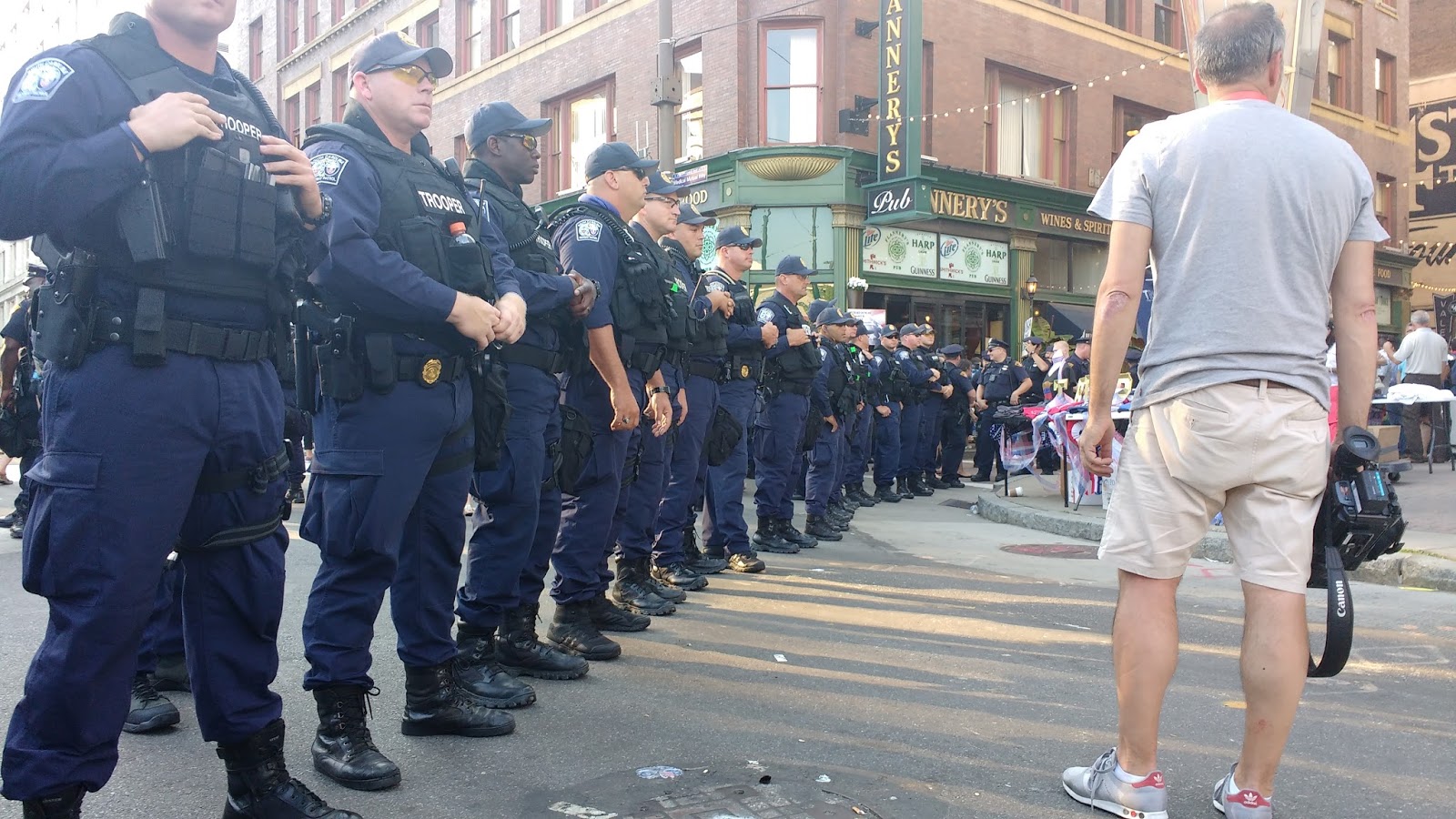
The expected unrest at the Republican National Convention ending the day before never developed. I was frankly disappointed. The streets had been flooded with law enforcement officers. Everywhere troopers–from everywhere–California Highway Patrol, Missouri, Indiana, Florida state troopers–in squads or moving through the crowd in threes and fours, fielding the condescending handshakes and thank-yous of the respectable crowd. And almost as many bike as foot platoons, moving, or staging for their next move, never staying put anywhere before a sergeant barked the command had them moving again in disciplined columns. Mounted police, more bicycle cops, motorcycle cops, dog teams, stray SWAT pairs in full gear, Secret Service directing traffic into and out of the arena.
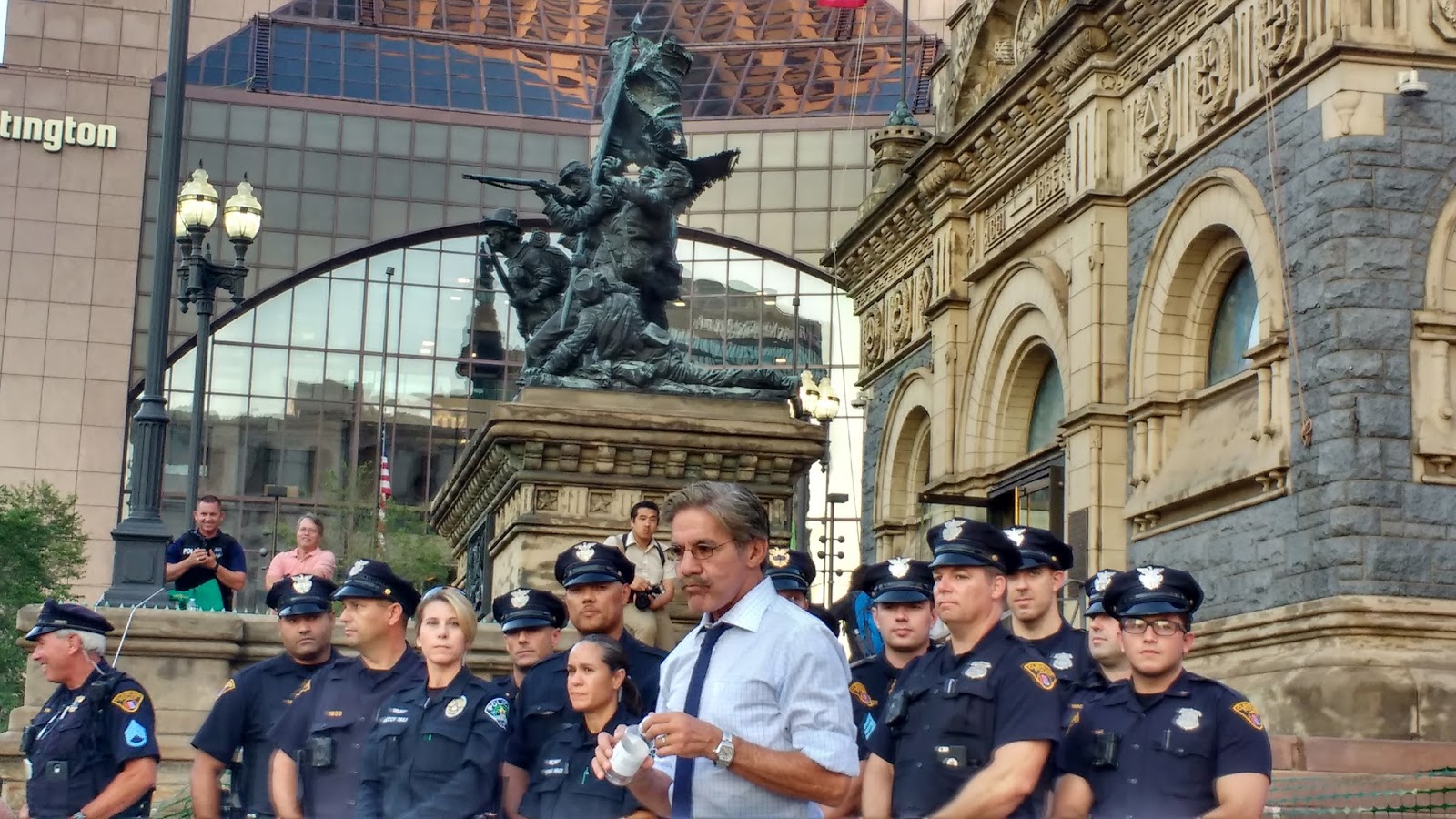
In the middle of it all the Cleveland cops in their old school uniforms, black, classic peaked hat with visor, like something out of a seventies cop movie. Buffed-up cops, with tattoos, fat, powerful-looking pot-bellied cops, big, shambling old-school cops, all of them looking just like cops. Spotters on rooftops. Everywhere cops.
Concrete barriers and heavy-duty, black, of course, framed chain-link temporary barriers separated sidewalks from street around the arena, guiding foot traffic away from closed areas that one followed at points like a mouse in a maze; I found at least one of these that simply dead-ended, forcing you to come out the way you came.
What didn’t appear were the protesters in number. No procession was better than a hundred, maybe; the vast majority numbering in the dozens. Even the anarchists were determined to keep their hands to themselves, rabid but restrained.
The Black Lives Matter presence wasn’t nearly black enough to inspire the intended dread.
A few, presumably, local black activists, old, tired, spoke in the square, some heartfelt but ridiculous, some just ridiculous, the more psychologically unbalanced ones more sympathetic than the stupid or cynical ones. On the final day a few rough-looking hood representatives showed up, perhaps looking for trouble but too few to manage the required quorum for chaos.
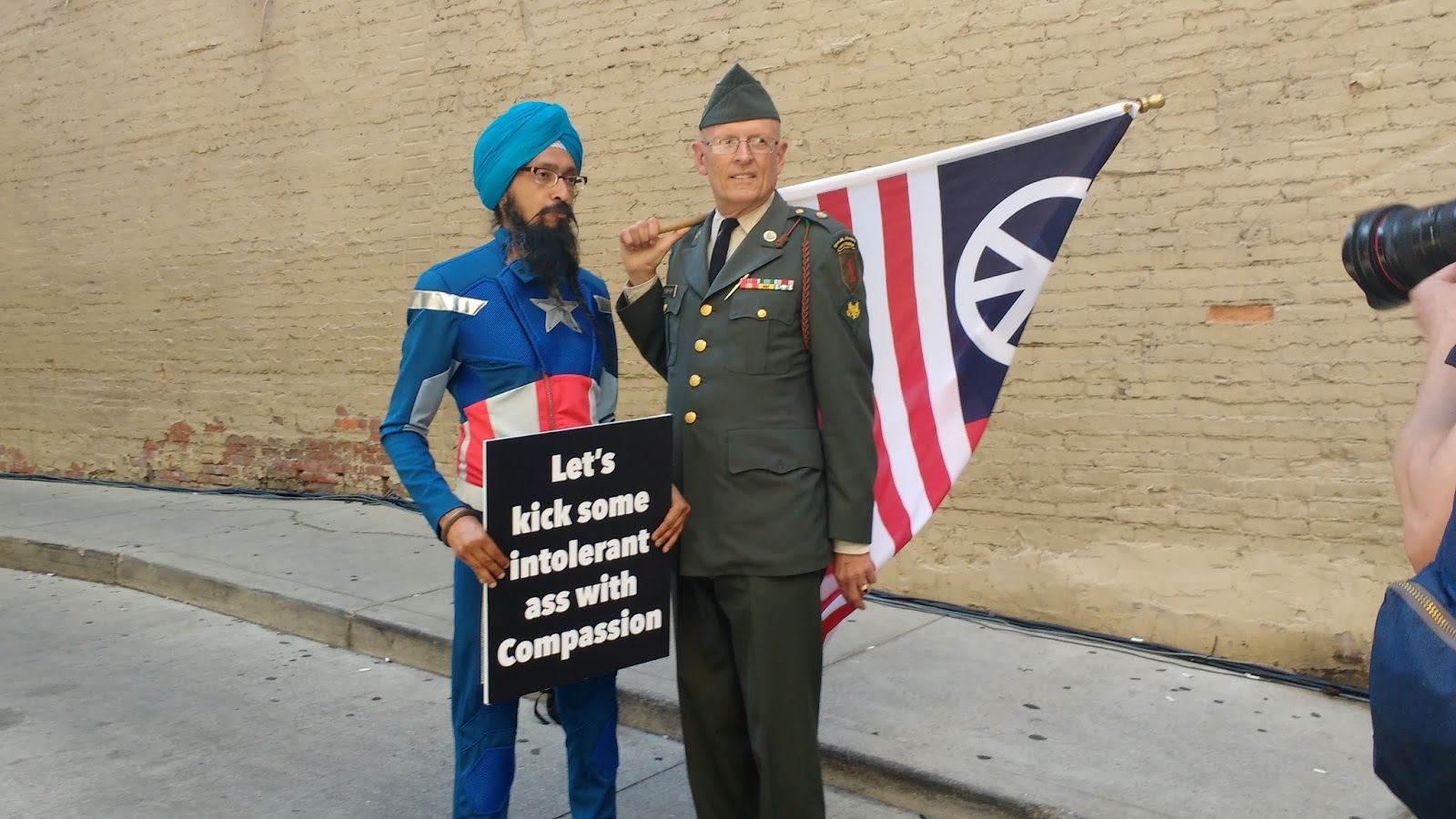
Any energy came from the young, predominately white college-age activists or the grim Latino pro-immigrant groups, humorless from message to tone, or the zealous, genuinely insane loners cruising the crowd. The common theme is performance; everyone seems to be, above all, self conscious of making a display, of being seen and heard. And the chanting, the dread, crude chanting, like a child’s parody of argument, the same chants over and over, as if a gang of idiots is trying to hypnotize you.
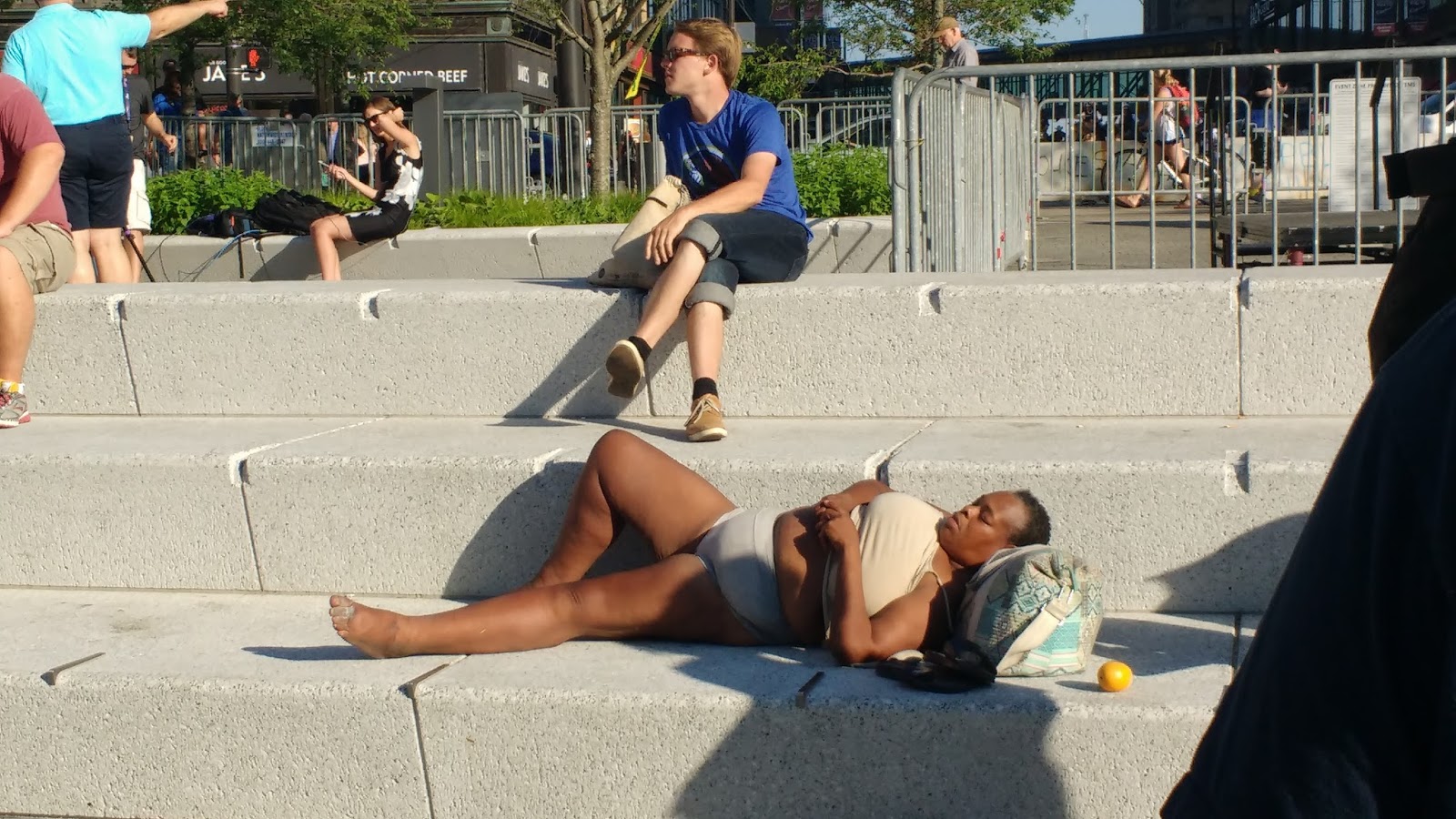
Away from the protests in the tight streets around the arena there are all these earnest Midwestern and Mormon Republicans threading through the crowd; something different about their heavier bond structure. Curiously handsome people. And the women, with a primped and styled Fox News aesthetic, sensible but snug dresses over gym-worked waists, heels everywhere clacking along the hot sidewalks. The occasional natural beauty. Dull-eyed locals and homeless taking it all in.
And more prevalent than any the same group of extreme evangelists (no one could decide if they were Westboro Baptist Church or not), drawing a crowd from behind a cordon of cops that grew thicker by the day, taunting Black Lives Matter and the gays with equal vigor and energy. If Cleveland was one giant scrum for attention, these were the winners. A small, hardy ban armed only with its pickets, its bullhorns and its audacity, dominating attention wherever they went.
As often as not the police contingent following a procession was larger than it, sometimes comically so. A single character might even draw bodyguards; there were plenty to go around. The protesters simply did not show up in force.
The last I saw of the fire and brimstone preachers they were still droning provocations through bullhorns, most of which were doubly offensive for being true, from behind a cordon of police four deep, as the crowd–united in this at least–shouted impotently.
I drove about aimlessly the day after the convention. Into the black ghetto to the east, past dull, mostly empty looking block-style project buildings, old, verging on ruin, here and there little, trapped architectural treasures and, always it seems in these places, you find at least one old, grand church deserving of renovation, fenced off, waiting.
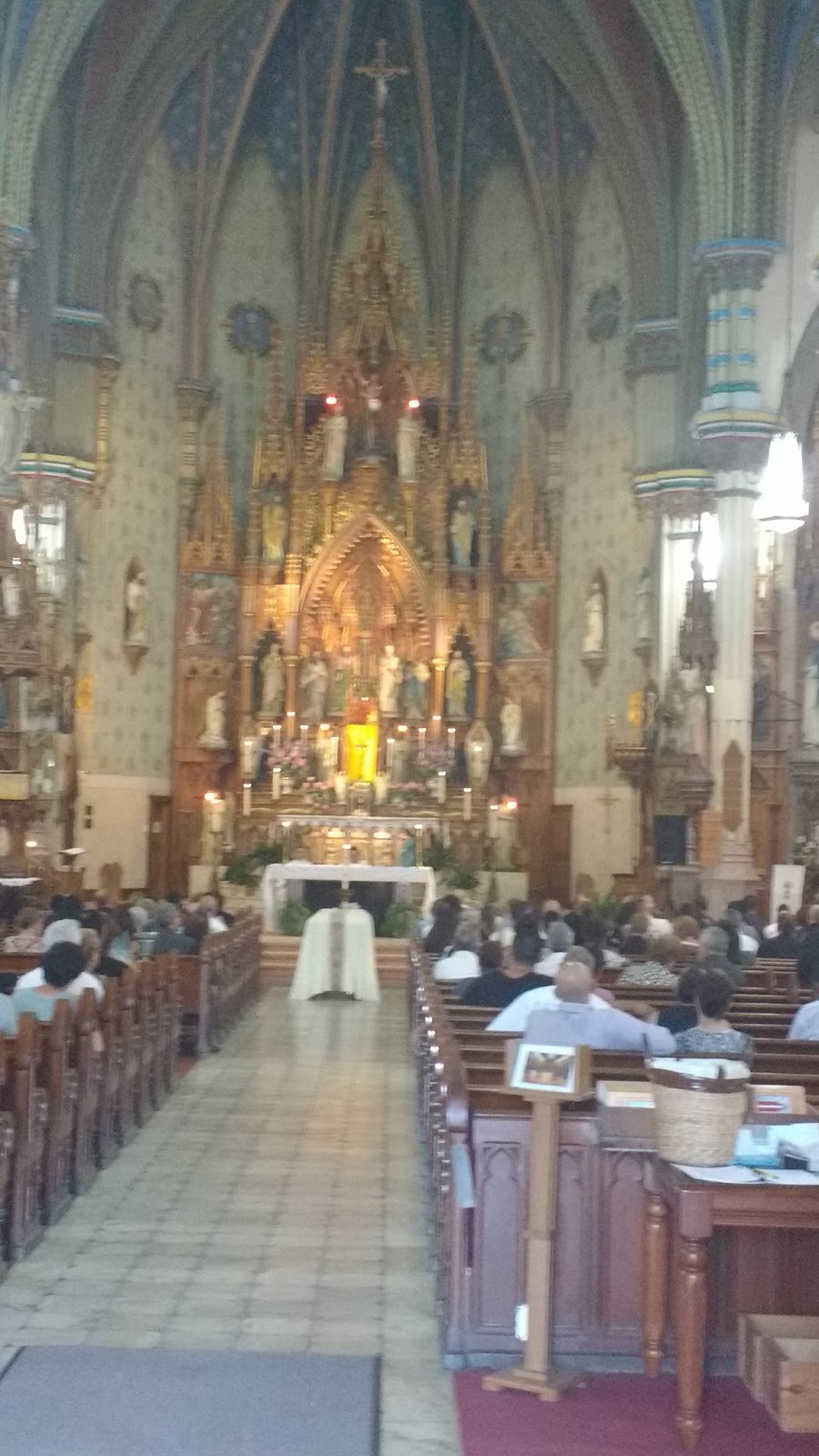
I went back downtown, against the flow of outbound tour buses and trucks; the press is already gone, vendors, depressing, crude, idiotic vendors, mercifully no longer calling like carnival barkers. I abandoned Cleveland and drove, for no particular reason, to Ohio City to the west. Again, through block after block of ghetto or marginal neighborhoods; here and there a gentrifying flare, maybe. I came across a Catholic Church in, I think, high-gothic style. For some reason I felt compelled to leave the camera behind. I went inside. The nave was overwhelming; ornate, high arches contained that Catholic statuary, colorful, detailed virtuosity that issues like a challenge you can’t possibly meet from the vaunted arches. Of course this inspires the minimalist reaction of Protestantism, and its inevitable artistic mediocrity.
The small dark figures of the Mestizo congregation sat silently before a bad recording of a Spanish language hymn, indifferent to me. I found myself inexplicably moved, tearing up. I determined that it would not be epiphany, or a “moment”; and it wasn’t, because awareness of the moment instantly destroys the integrity of the moment; something like Heisenberg’s uncertainty principle is at work. Never being free of the self-consciousness, of the sense of being watched, of giving a performance…moments of revelation are no longer possible. I think this standing in a brilliant work of art the design of which is to make me aware, I think, not just of the presence of God, but of being seen by God. His absence here, now, is unbearable.
That was Cleveland; the revolution didn’t show up. The dread was not realized. Maybe things aren’t so bad after all. This, more or less, occurred to me sitting there at a traffic light, sensing without quite thinking, as one is apt to do, the weird life-randomness that finds one, say, sitting among commuters in Akron, Ohio thousands of miles from home.
It took a moment to notice, but the street we were waiting to cross was filled with a procession of cars. They threw up gang signs from behind the wheel or as they hung gleefully out the side of minivans, bobbing their heads, shouting, performing. The black ghetto was putting on an unofficial parade. Our light turned green. And they just kept coming. A few meek honks of the horn. Our light turned red, and they just kept coming. A few more honks. The intersection cycled through several times before they finished passing, cursing, taunting, laughing. Intimidation achieved, power demonstrated, message sent with admirable clarity: we can take over your town.
It was just short of terrifying. I couldn’t help thinking: there my niggas at! Someone is answering the call to revolution, at least.
Cleveland, 2016
The Thin Blue Vein
She doesn’t have a coherent analysis, she probably doesn’t groom, but I’m in love.
Drawing a Crowd
Police tactics at the RNC
Nobody drew more consistent negative attention in Cleveland than the group of Westboro-esque extreme evangelists with their fire-and-brimstone-for-the-homos routine. Utilizing their strength in numbers, police simply cordoned off any two groups that squared off in potential conflict, often with quick-reacting platoons swooping in on bicycles, dismounting and using them as barriers.
I saw at least one spotter (or sniper) on a parking garage rooftop; perhaps they helped coordinate from their vantage, as sometimes harried police hustled from one potential flashpoint to another.
More often than not police outnumbered protesters on both sides, often comically so. Sometimes you’d see a contingent around a lone character surrounded by opponents; for the life of me I couldn’t tell why this one in particular was seized upon.
See Emily Play
Emily Williams of Nashville.