
Live at 11:00 AM Pacific
Flags, Rags and Fags
A bill to redesign the Washington state flag, which features a portrait of the state’s namesake George Washington, failed to make it to the floor of the state legislature.
House Bill 1938, sponsored by Rep. Strom Peterson, D-Edmonds, would create a committee to come up with the redesign by 2028.
“[We’re] not asking to remove George Washington from the history of Washington state,” Peterson said. “This is more about the aesthetics of the flag and what the flag could represent to bring people across the state together.”
Peterson says the current design is plain and this proposal is an opportunity to create civic engagement, highlight Washington’s rich agricultural diversity, and create a sense of pride.
Republicans don’t see it that way and are deriding the bill as “un-American.”
The North American Vexillological Association — vexillology is the study of flags — identifies five elements that make a good state flag: simplicity, including symbols meaningful to the state, limiting colors, not relying on lettering or seals, and not resembling any other state’s flag.
Vexillology is a suspect discipline, and the North American Vexillological Association, inaugurated in 1967, is rotten with pc trendiness. Their website features a video by an obnoxious man named Michael Green (looks Jewish, sounds gay), proprietor of “Flags for Good”, a company apparently seeking to monetize cultural erasure by lobbying for and contracting to redesign your state’s flag. Flags for Good is described by Green as a “large player in the LGBT+ flag space” (so, nothing to say for the ugly and confusing welter of “Pride flags”, some of which they may be responsible for). Green is a former marketing guy hostile to nation, tradition, “arbitrary borders drawn hundreds of years ago” and the wrong types of “identity” (while being very enthusiastic about the right types of identity). He looks forward to AI designing “objective” new flags for various states and overcoming the objections of troublesome humans. He sees states and nations as “just service providers” and looks forward to a time when “our nationalities act like streaming services, where citizens can subscribe to a nationality because they like the health care and the tax benefits…” He’s got two TEDX Talks under his belt.
Apparently vexillology has its own eminences with their own “knowledge is good” level profundities:
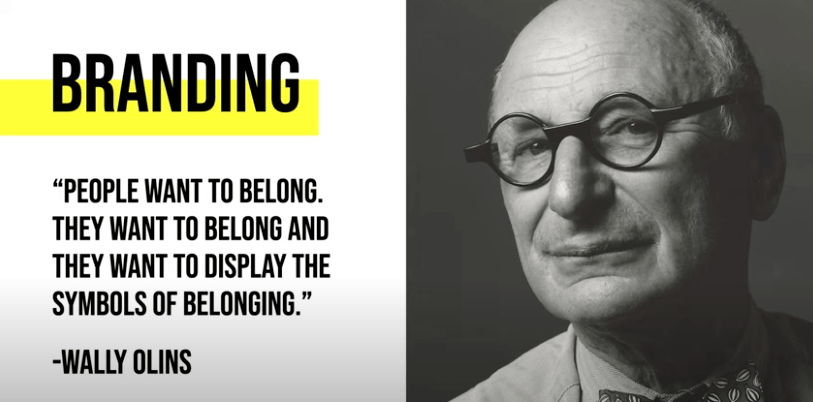
Olins was a British Jew expert in corporate branding.
Minnesota of course recently changed its flag, in part because it had an Indian on it.
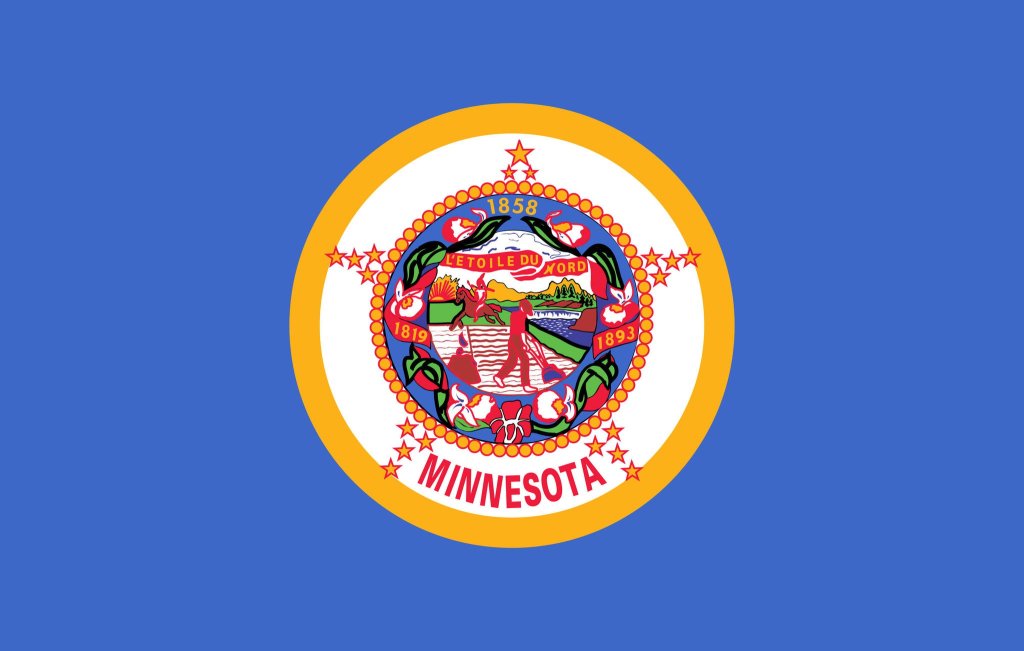

One criterion cited by such as the “experts” of NAVA making for a good flag is simplicity–so that said flag can be easily recreated in other formats. All that detail in the original Minnesota flag means it’s hard to reproduce, say, on letterhead or badges. Personally I reject the very idea of objective criteria for flag design. Aside from the inherent charm in outdated design (witness classic cars), archaic aesthetics constitute living, three dimensional and tactile history that cannot be reproduced in text or video–not reproduction but preservation of the real thing. Flag redesign can be filed under cultural erasure, but beyond the trendy political act, the obsession to redesign and update traditional symbols means loss of invaluable living historical artifacts. No wonder the soulless and (self imagined) stateless hollow men hate them.
But the faddish post-national point of view can’t have too much preservation, acting as it does as an affront and challenge to new, trendy and trite ideas such as “choosing” one’s identity, or humanity living in alienation from the natural world as represented by geography, heredity, nation, sex.
In 2006 Seattle’s King County changed its logo from a crown to a stern and accusatory image of Martin Luther King, who had no particular connection to the region. The county was originally named after William Rufus de Vane King, vice president to Franklin Pierce and a slaveowner, hence the re-designation. William King had no connection to the region either, if you don’t count rumors of his homosexuality.

The University of California updated its logo some years back, simplifying, or one might say, retarding it; here it is alongside the old one:

One is supposed to be inspired by the thought of staring at his screen watching that little “please be patient” dot-spinning-in-circles-of-futility icon.
I’m also reminded of my favorite bizarre brand design, the sinister and ambitious Sherwin Williams paint logo, designed by a man named George Ford and adopted in 1905:

Ford wanted to emphasize the brand’s global ambitions. Perhaps he was a closet postmodernist, before the phrase was invented, out to deliberately unsettle and discomfort the viewer. You could write a book on how “bad” the logo is, but Sherwin Williams did of course go on to become global, and is the world’s most valuable paint brand, at 7.5 billion dollars as of 2023. I’m sure the soyboys at Flags for Good and NAVA would disapprove, but the design is not inconsistent with their own progressive and aesthetic standard, representing One World with its “arbitrary” borders and confusingly detailed natural geography submerged under a unifying and obliterating global glaze–fittingly revolutionary red.
Talk of renaming Washington State began (or accelerated) in the summer of 2020 (because Washington was a slaveowner) with the George Floyd riots. I genuinely wonder if someone thought of naming the state after Floyd. Why not replace one George with another? The State of Floyd sounds appropriately ridiculous, and the image of a golden casket might pass muster with the gang at Flags for Good, if sufficiently crude in execution (pardon the phrase) and if they got the contract to design it.

Portland: Doom Follows Dumb
PORTLAND, Ore. (KPTV) – Economists are warning that Portland could be heading towards what they call an “urban doom loop.”
An urban doom loop happens when businesses close, people move out of a city, and in turn, tax revenue goes down, which causes a decrease in programs that spark economic activity, causing more businesses to keep closing.
The warnings come after the Portland Chamber of Commerce presented their economic forecast.
Some of the key takeaways from the presentation are that Multnomah County is losing residents and losing high-paying jobs.
In 2023, Multnomah County lost just more than 5,000 residents after losing more than 10,000 each year in 2021 and 2022.
The report also found that the county is losing thousands of jobs.
In 2024, there were 6,700 jobs lost in the information, financial and professional services sectors. The report also shows that people who make higher incomes are either staying in Multnomah County or they are leaving, but not moving in. The county is instead seeing people with lower incomes moving in.
On the contrary, Clark County in Washington is leading the region in population growth and is seeing people with more money moving in.
The region lost jobs last year while the national labor market grew substantially–a rarity for Portland during an economic expansion–and the losses were concentrated in high-paying sectors like information, manufacturing, professional services, and financial services. Population loss has continued, as small natural increases (more births than deaths) were offset by out-migration.
The housing crisis persisted, with production remaining sluggish, and outside investors viewed the region unfavorably.Despite the region’s stunning natural amenities, people have been “voting with
their feet” against the Portland area. High housing costs are a primary factor,
but the contrasting growth patterns between Oregon and Washington strongly
suggest that taxes and public services are also playing an outsized role…
Portland’s Multnomah County’s population loss is mitigated through immigration (and homeless in-migration) while its younger professionals move out, as it transitions from “Whitopia” to dystopia:
In 2024, there were 6,700 jobs lost in the information, financial and professional services sectors. The report also shows that people who make higher incomes are either staying in Multnomah County or they are leaving, but not moving in. The county is instead seeing people with lower incomes moving in.
Meanwhile house prices refuse to relent. The region is primed for Black Rock’s purported attempts to buy up residential real estate nationwide.
The housing affordability crisis is prevalent across the entire Portland metro area. Households with less than $85,000 annual income, a 20% down payment and an assume 6.5% interest rate, have virtually no affordable options between Wilsonville, OR to the south and La Center, WA to the north. Those with somewhat high incomes–up to $110,000–can find affordable options in outer suburbs (e.g., East Portland, Gresham, Aloha, and parts of Vancouver); however, those locations often come with longer work commutes and higher transportation costs. Much of the region is affordable only to households with income of $160,000 or higher.
Naturally the report, coming from the Chamber of Commerce, prescribes immigration as the answer.
Portland and its peers face slower population growth compared to the past two decades, with no domestic in-migration. Growth now relies on natural increases (more births than deaths) and international immigration. For the Portland region, population remained virtually flat in 2022–2023, as domestic out-migration offset modest gains from natural and international migration.
The report cites the ongoing depredations of Covid measures, but neglects to mention the George Floyd riots, Portland’s inability to enforce the law on homeless squatters and drug dealers and the ongoing disaster of its “harm reduction” model addressing the fentanyl crisis.
Meanwhile the homeless industrial complex is running out of money, naturally:
PORTLAND Ore. (KPTV) – Multnomah County is facing a $104 million shortfall in its budget for homeless services and has asked the state and Metro for emergency funds to help fill the gap, county officials announced on Friday.
On Friday, County Chair Jessica Vega Pederson said she sent letters to Metro and the state of Oregon asking for emergency resources to prevent deep cuts to critical services:
- Request to the state of Oregon: An additional $55 million.
- Request to Metro: $30 million, from unspent existing administrative funds.
In a statement from Governor Tina Kotek, she said she “learned about this ask less than 24-hours before the news dropped,” and has not yet decided whether to fullfill Vega Pederson’s request for funding.
“I made addressing homelessness and housing affordability a clear priority in my budget in response to the crisis at hand, which is impacting every corner of the state – not just Portland,” Kotek said in her statement. “And, Multnomah County’s challenges are real, and they serve among the largest homeless population in Oregon. Elected leaders have to make hard choices every single budget cycle based on the needs of Oregonians. I learned about this ask less than 24-hours before the news dropped. I have outstanding questions and potential concerns about how the county decided to make cuts to homeless services in their general fund. I am not prepared to take a position on whether to send one more state dollar to Multnomah County unless and until my office and the legislature have clear answers.”
Metro also said in a statement that it is still assessing Multnomah County’s situation and request for funding.
“Our top priority – everyone’s top priority – needs to be helping people get housed and sheltered, and maintaining our successes,” Metro said in its statement. “Every night, thousands of Oregonians sleep in beds furnished through the SHS program. We owe it to them, and to each other, to make sure they stay housed or sheltered and don’t end up back on the streets – while also working to end chronic homelessness in the Portland region.
Vega Pederson also sent letters to Washington and Clackamas counties asking them to work with Multnomah County on near-term and longer-term funding solutions for homeless services with impacts across county lines.
According to officials, the expected shortfall is due in part to the latest forecast of income from the Supportive Housing Services tax, which is expected to be lower than initially thought.
Without help from state and local funds, the county is facing a 25% cut in homeless services.
Meanwhile in Germany
The excellent German Substack blogger eugyppius gave a rundown of today’s German elections the other day:
Many readers – especially many American, Canadian and British friends – have expressed bewilderment at Germany’s party system. The eve of the German elections is as good a time as any to provide a basic primer on the different parties competing for votes within the Federal Republic, their rivalries and alliances, and their future prospects. This broad view will also clarify many present political tensions and explain why the firewall against Alternative für Deutschland has become such an important political principle, increasingly synonymous for our elites with “liberal democracy” itself.
For the sake of simplicity, I’ll only describe the largest parties that are most likely to make it into the Bundestag, and I’ll neglect many historical matters and some crucial details, with a view towards clarifying present affairs.
The German party system is highly conservative, and it continues to be dominated by the traditional parties, which have been with us since the founding of the Federal Republic in 1949 or even before. There are three of these:
1) The Christian Democratic Union (CDU) and its smaller Bavarian sister party, the Christian Social Union (CSU). The CDU and the CSU were originally conservative Christian democratic parties with some market liberal sympathies. Until the crucial chancellorship of Angela Merkel, they were also Volksparteien, or big-tent parties that represented basically all constituencies across the legally permissible right half of the political spectrum. Once upon a time, the CSU ruled Bavaria with an outright majority, and through the mid-1990s the CDU and CSU together generally commanded over 40% of the vote federally. Their decline began before Merkel’s chancellorship, but Merkel and her strategy of asymmetric demobilisation (more on that below) have cast them into a long crisis. If you had to sum up this crisis as briefly as possible, you’d say that it arises from the gradual transformation of the CDU/CSU from Volksparteien into the heavily triangulated centre-right parties of the present. The Union parties booked their worst result ever in 2021, with a mere 24% of the vote. They will be lucky if they get much more than 30% this time around. Americans looking for some orientation could do worse than equating the CDU and CSU with the pre-Trump Republican Party of the United States.
2) The Social Democratic Party (SPD). The SPD is the left-leaning counterpart to the right-leaning CDU/CSU, and their origins stretch back to the nineteenth century. The National Socialists banned the SPD, but after their wartime exile they returned to German politics. They were reconstituted in the Federal Republic and folded into the ruling Socialist Unity Party (SED) in communist East Germany. The SPD were also originally a Volkspartei, covering the left half of the political spectrum as a counterpart to the Union parties on their right, and they were once the traditional party of the working man. The SPD formally renounced Marxism after the 1950s, but they remained the home of hard-line leftists thereafter, although more moderate welfare-state progressives and cultural leftists have grown in prominence over the years. The SPD have always been slightly weaker than the Union parties federally, but through 2005 they could generally count on well over 30% of the national vote, and sometimes (as in 1972 and 1998) they even bested the CDU and CSU. Like the Union parties, the SPD are also in long-term decline, as they bleed working-class voters to the AfD and even CDU/CSU, and some of their more doctrinaire leftists to the newcomer Greens and even Die Linke. Tomorrow they will do worse than they have since the founding of the Federal Republic, coming in around 15%. American friends might want to think of the U.S. Democratic Party as a very rough analogue to the SPD, although the British Labour Party is perhaps a better comparison.
3) The Free Democratic Party (FDP). I often call the FDP a market-liberal party, but strictly speaking they are Ordoliberals who advocate for free markets while remaining agnostic on the wisdom of the social welfare state. Very crudely, you could say that the FDP is the party for people who would like to see their tax burdens reduced and hope for less interference in their lives and their businesses from the regulatory state. The FDP cultivated an openness towards both the left and the right halves of the political spectrum and traditionally worked as a majority maker for either the CDU/CSU or the SPD. Their association with the disastrous traffic light coalition government under Chancellor Olaf Scholz has all but destroyed them, and they are on track to receive their worst-ever election results tomorrow – even worse than their catastrophic showing (4.8%) in 2013. The FDP could really be finished, and they face a doubtful future as a minor West German party with almost no support across much of the East.
For 37 years – from 1961 until 1998 – the CDU/CSU, SPD and FDP constituted a closed political ecosystem within themselves. They excluded upstarts from national politics in much the same way as the they fight to exclude Alternative für Deutschland now. Two generations of West Germans grew up within this triptych and have a near-religious devotion to the traditional parties. This is why West German voters appear unable to make rational choices at the ballot box and continue to elect the CDU by the millions, however many times the Union parties betray them. Ironically, it is the instinctive conservatism of many Germans that has allowed the CDU to adopt an increasingly leftist agenda and to flirt with left-wing parties like the SPD and the Greens. Many older West Germans will vote for the CDU until they die, whatever the party does.
Reunification disturbed these old relationships, and the years since 1990 have seen the slow yet remorseless erosion of the traditional party system of Germany and the emergence of destabilising rivals. There are four of these, but 6) and 7) are the most important:
4) Die Linke, or the Left Party. The communist DDR was ruled by the Socialist Unity Party, or SED. After reunification, the SED rebranded itself as the Party of Democratic Socialism (PDS). Separately, hard-left activists in the SPD, disenchanted by the centrist politics of SPD Chancellor Gerhard Schröder, formed the minor Labour and Social Justice Party (WASG) in 2005. Two years later, the PDS and the WASG merged to form Die Linke. They are basically a smaller post-communist opposition party that has never been in government. After the last elections in 2021, Die Linke appeared to be in its death throes, and when Sahra Wagenknecht (their most prominent politician) abandoned them to found her own Linke offshoot (the Bündnis Sahra Wagenknecht, see just below), many including myself thought that Die Linke were done for. Not so! Thanks to a social media blitz masterminded by the abrasive Heidi Reichinnek and a tactical return to nuts-and-bolts socialist themes like affordable housing, Die Linke are surging in the polls and will perhaps come in as high 8% tomorrow. This is not altogether unexpected. In the Merkel era, Die Linke always hovered between 8% and 12% of the vote.
5) Bündnis Sahra Wagenknecht, or the Sahra Wagenknecht Alliance (BSW). The BSW is the newest of newcomers, founded in January 2024 by the erstwhile Linke politician Wagenknecht and tightly bound to her celebrity. The BSW is in many ways a party of the old left, combining a hard-line socialist agenda with worker-friendly migration restrictionism and an overarching demand for an end to the war in Ukraine and a cessation of weapons deliveries to the AFU. This combination of themes means that they have some appeal to both the right and the left, and in this respect they mimic something of the electoral strategy (but not the substance) of the FDP. Their anti-Atlanticism, however, works to subvert this superficial compatibility, and will likely disqualify them from any national coalition government. This paradox is easily explained: The objective purpose of the BSW, baked into them upon their founding, was to attract some portion of the Alternative für Deutschland vote in East Germany, enabling the traditional parties to form majority coalitions there without AfD involvement. In the end, BSW did draw some AfD votes, but they pulled support from other parties too. Their mission to make non-AfD majority coalitions has kind of panned out (in Thüringen and Brandenburg), and kind of not (in Saxony). Fulfilling this role has also soured many would-be supporters, and BSW are well down from their polling high of 10% last autumn. There is perhaps a 50% chance that they squeak over the 5% hurdle and return to the Bundestag, and their longer-term significance is highly uncertain beyond East Germany.
6) Bündnis 90/Die Grünen, or simply the Greens. I have written more than I ever should’ve about the Greens, and this party will be no great mystery to my readers. They were founded in West Germany in 1980, combining various new left movements that had no real home in the SPD. They were environmentalists, hard-line opponents of nuclear energy and peace activists, and in their earliest phase they were also infiltrated by DDR agents. Upon reunification, the Greens first melded with the East German Green Party, and then in 1993 they absorbed the East German Bündnis 90 (“Alliance 90”), which is why they sport this awkward name. Along the way the Greens were domesticated, or rather they domesticated themselves. They shed their anti-Atlanticist protest elements in favour of a new rabid Atlanticism, and the uncharitable would say that they left one notional foreign partner (the communist East) for another (the United States). They first entered government in a coalition with the SPD under Chancellor Schröder in 1998, and that marked their gradual promotion to the party of the German political elite. They have grown in social and cultural prominence as the SPD have declined, joining the three traditional parties to form the reigning four-party cartel system. The Greens are the party of the media, of intellectuals and of status-conscious urbanites everywhere. Their mostly well-off and oblivious voters have yet to feel serious economic pain, which is one reason the party demonstrates such resilience. They will probably come in at no more than 13% tomorrow, only slightly down from their 2021 showing of 14.8%. Barring economic catastrophe, the Greens enjoy a hard floor of 8-10% of the German electorate.
7) Alternative für Deutschland, or the AfD. In the wake of the 2008 Euro crisis, Angela Merkel repeatedly characterised unpopular countermeasures – whether bank nationalisations or financial aid for a beleaguered Greece – as “without alternative.” In response, a small group of disenchanted former CDU members founded Alternative for Germany in 2013 as a moderately Eurosceptic party opposed to the financial policies of the Eurozone. Merkel fed the AfD via her characteristic political strategy of asymmetric demobilisation, according to which she would preemptively adopt for herself the programme of the opposition (particularly of the Greens) to deny them campaign issues. Thus many of Merkel’s signature policies, from the nuclear phase-out to open borders, have a distinctive leftist flavour to them. As Merkel transformed the CDU into a standard European centre-right party, she left her right flank unguarded, and the AfD grew to fill this empty political space. The AfD political programme has accordingly expanded over time. You might think of the present AfD as consisting, very roughly, of three parts. There is the older market-liberal contingent, from which the present leadership hail. Separate from them is the nationalist contingent around figures like Björn Höcke in Thüringen and Maximilian Krah, who draw the greater part of the (disingenuous) Nazi accusations. Beyond the strict bounds of the party, meanwhile, is the Vorfeld, its “forefield” or “apron” – a loose group of activists, social media personalities and the like who skew younger, often have unapologetic nationalist tendencies and contribute much of its cultural energy. The AfD benefit from the self-destruction of the Union parties and also from the native working classes, who are leaving the SPD in droves. Tomorrow they will do better than they ever have before, with perhaps 21% of the vote.
From the first moments of the AfD’s existence – well before the nationalists ever appeared in their ranks – they have been branded as an extreme-right party, and the CDU have rigorously enforced a firewall against them, pledging that they will never achieve any legislative or governmental outcomes with AfD support. Merkel and the rest of the CDU leadership feared that any approach would legitimise the upstarts and set off mass defections to their rivals. These views still hold strong within CDU leadership, but a growing number of CDU members question the wisdom of this strategy.
If the German political landscape seems complicated, that is because the traditional parties have proven too inflexible to incorporate new political currents on the one hand, while nevertheless managing to survive on the loyalty of older German voters on the other hand. Since the late 1990s, the three mid-century parties have fused with the Greens to form a political cartel – one in which the Greens mostly set the agenda while the CDU positions itself to provide majorities. The Greens enjoy sufficient cultural power that they can influence the political agenda even if they find themselves in the opposition. You could say, with only slight exaggeration, that the cartel parties function as a single disorganised uniparty among themselves. Only the Greens and the AfD demonstrate any strategic aptitude and any interest in delivering to their voters.
Put another way: German politics presently hosts two different political systems in competition with each other. Against the cartel are arrayed the unincorporated upstarts (AfD above all, but also BSW and perhaps also Die Linke) who betoken a new politics that the establishment is fighting desperately to suppress. The firewall, originally conceived to contain CDU voters under Angela Merkel, has become the final defence against this new politics and the singular lynchpin of the cartel’s power. The most unusual feature of the present election is the support that the AfD have received from prominent Trumpist Americans like Elon Musk and J.D. Vance. The cartel parties, including the CDU, perceive this advocacy as a direct attack, and they have responded by doubling down on the firewall, because if and when it falls, German politics will change forever. Their sinecures, their grants, their activist organisations and eventually even much of their sympathetic media will disappear, as the SPD and especially the Greens lose their relevance at the national level and the Union parties enter a terminal decline.
Polls are now closed. Looks like the AfD didn’t quite make it to 21 percent.
 untethered