
A New York Times “analysis” of Telegram activity breathlessly warns of the potential for rightwing violence on election day.
More than 4,000 of their posts went further by encouraging members to act by attending local election meetings, joining protest rallies and making financial donations, the analysis found. Posts from other right-wing groups reviewed by The Times urged followers to be prepared for violence. These calls to action extended the right-wing language typically found on other major social media sites into the physical world.
In New Hampshire, one Telegram channel instructed people to question local officials in person about absentee ballot tallies. In Georgia, followers of a local Telegram channel were urged to attend election board meetings to argue for limits to absentee voting. In New Mexico, people were told to monitor voting stations with cameras, file police reports if necessary and be ready to “fight like hell.”
You might find it hard to discern the threatened violence there, but, as the Times points out, we’re talking Telegram here:
Katherine Keneally, a former intelligence analyst with the New York Police Department, said views shared on Telegram should not be dismissed as the musings of a fringe minority but rather seen as a warning about what could happen on Election Day and beyond.
“Telegram is very often central to actually organizing people to engage in offline activity,” said Ms. Keneally, who now works for the Institute for Strategic Dialogue, a research firm that monitors Telegram. She recalled attending a meeting in 2022 of election skeptics in Montana, where participants taught one another how to use Telegram. Among more extreme movements, she said, Telegram is used “very strategically to radicalize and recruit.”
Remember the CEO of Telegram was arrested in France in August for “illicit material” on the site and not enough content moderation, as if that was a crime.
The company’s growth — it now has more than 900 million users — has been driven partly by a commitment to free speech. Telegram’s light oversight of what people say or do on the platform has helped people living under authoritarian governments communicate and organize. But it has also made the app a haven for disinformation, far-right extremism and other harmful content.
That paragraph betrays a remarkable lack of awareness on the part of the Times, which sees nothing authoritarian in the media’s knee-jerk response to shut down any suspicion of election fraud without bothering to investigate claims. Telegram CEO Pavel Durov appears to have relented to authorities after his arrest, making changes to the app that may be the reason the Times and US government are able to monitor it more effectively now–one of the demands made of Telegram was to take on more moderators, and some surmised with good reason this meant spies working for authorities.
Telegram played a small but significant role in the 2020 election as an organizing tool for planners of the Jan. 6 attack. Today, its influence is greater and potentially more ominous, according to The Times’s analysis.
Right-wing media channels post a stream of news, memes and misinformation about perceived voting irregularities, which are then picked up by other groups that use them to argue that the Democrats have begun to steal the election. Mixed in are calls for citizens to show up at the polls and to monitor and report irregularities — or fight if necessary.
An objective observer will find it difficult to judge the veracity of the various charges of fraud leveled in this election year, in no small part because the media refuses to engage them honestly, choosing only to dismiss with a wave of the hand all but those that can be easily disproven. Rash or flaky accusations are welcomed and used to cast doubt on the practice of questioning of the integrity of elections as a whole.
Note how the treatment of election skepticism (from the right, one is still allowed to traffic in the “Russian collusion” hoax) works just like the media’s defense of the Covid regime: media mobilizes to discredit charges immediately without testing their veracity and skepticism itself is demonized for degrading our trust in whatever institution is coming under fire. Damaging the reputation of authority is criminal now, whether it’s charges of Covid disinformation–destroying trust in the medical establishment; reporting on the shenanigans of the intelligence community re Donald Trump–disparaging the heroes of the CIA; and, now, doubts about questionable practices besmirching election officials. Most notable of course is how skepticism of those first two has proven warranted.
My take on the question of election cheating in 2020 and now has always been that it strains credulity to believe the establishment would have spent these last eight years breaking every rule of decency and fair play to be rid of Donald Trump only to slam on the brakes when it comes to election interference. Indeed, their actions everywhere else–the serial hoaxes and cross-institutional collusion since 2016–constitutes what we should call governing interference in the same sense as there is a thing called election interference. This governing interference even can’t help but effect and constitute a level of election interference, by hamstringing and slandering an administration you lessen its chances in the next election and this is just one consequence of your malfeasance. I think those engaged in this factored that in. Making Trump un-electable was a motivation; if they couldn’t get him thrown out of office they would at least wreck his chances at re-election.
Beyond that, if you voted for Trump in 2016 the media, the intelligence community, the Democratic Party, elements of the Republican Party and others all colluded to disenfranchise you over the ensuing four years by digging in their heels and refusing to play fair, and then they colluded to fix the 2020 election. They had already won–because they’re at all the levers of power–by the time Trump’s supporters were reduced to relying on Rudy Giuliani and Sidney Powell and nobody was–or is now–talking about the massive crime that transpired over four years. To say nothing of the boon that Trump, specifically the panic manufactured around Trump, was for the forces of authoritarianism and anarchy: the increased censorship and warping of the legal system through lawfare, just for starters; and the gaslit, deranged half of the American public ready to accept it and more to–cry tears of laughter, cry tears of pain!–“save our democracy”.
Meanwhile we can be assured antifa will be mobilized on November 5 and must wonder if it’s with some encouragement from the establishment they profess to hate but whose bidding they always seem to be doing–they have been quite silent during the Biden Administration after all. Time to get the band back together.
Seattle’s antifa action is scheduled for Cal Anderson Park downtown on election night.

Cal Anderson Park was a hotspot in during the BLM riots of 2020 (another Trump election year, by coincidence) helping to birth the nearby Capitol Hill Autonomous Zone, site of the wretched Black Lives Matter Garden and scene of what might have been the most gruesome murder ballad to come out of Seattle’s “Summer of Love”.
Portland antifa will be convening at Chapman Square downtown. That’s a small park block in between the city hall and the police station and federal courthouse on the other side. It was occupied by antifa for much of the summer of 2020.

Meanwhile in DC they are boarding up and some are even pretending this is in anticipation of rightwing violence:
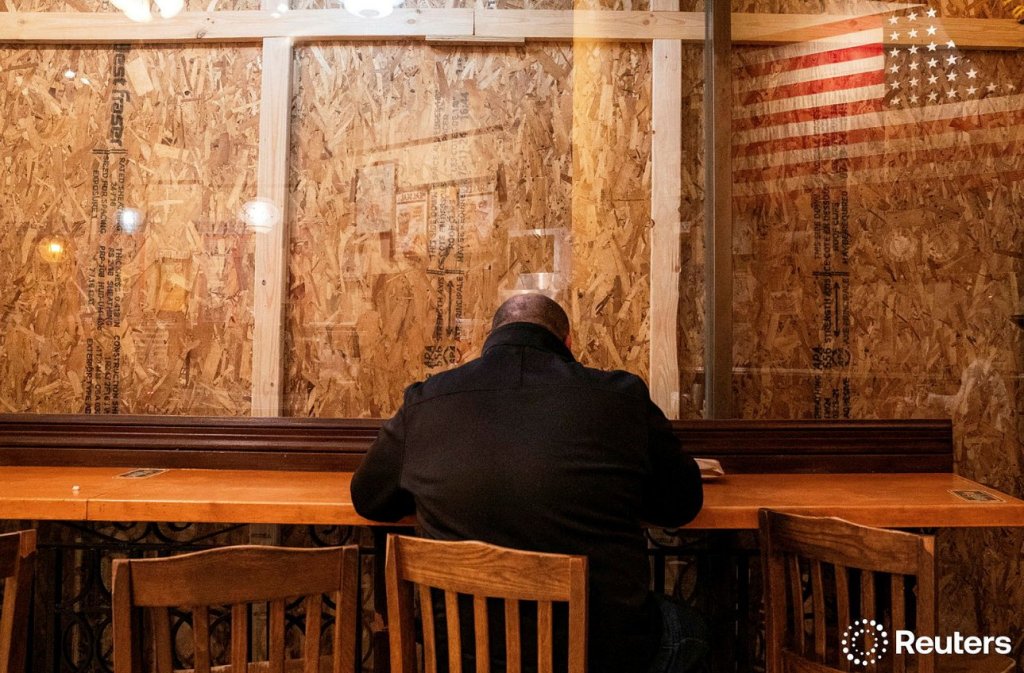
Now is the nervous time, now is the fun time.
 untethered